Showing posts with label BOOK REVIEWS. Show all posts

Tuesday, March 10, 2020

ARCHITECTURE AND NIHILISM: MASSIMO CACCIARI


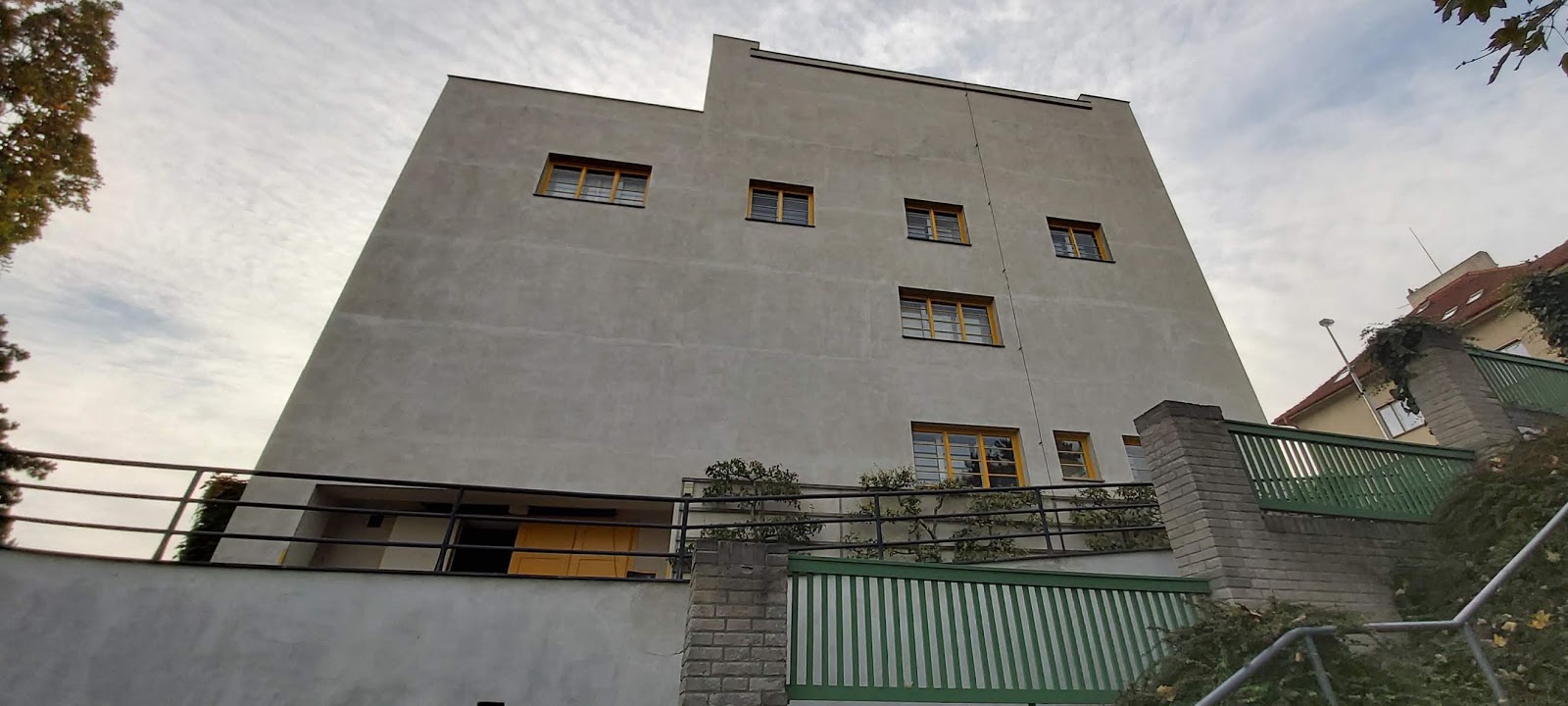
The author attempts to establish relationship between philosophy and modern architecture, critically examining the avant-garde endeavors to the social and political manifestation of metropolitan set up. It is an outstanding theoretical plunge into scholastic and polemics of most complex debate on aesthetic-philosophical nature of architectural theory. The author has audaciously challenged the metaphorical thread between architecture and philosophy that has prevailed in intellectual tradition of architectural theory and urbansim. 

The three chapters navigates through the authors philosophical trajectory, from Marxian trending to German Urban Sociologist tradition, along with Adolf Loos work and other prominent architectural events. The first chapter is dedicated to artistic representation leading to Loos's Architecture through the argument in " The Dialectics of the Negative and the Metropolis" The Nihilistic position is arising from the tragic eschew of negativity of metropolis, amounting to language of contradiction and sign of alienation of its Architecture. The second chapter on "Loos and his Contemporaries" attempts to frame Loos's architecture being anti-expressive, dismissal, anti-synthetical and un-compositional. 

" That artistic choice is searching for neither salvation nor consolation nor escape: the great, tragic form of the artists mentioned by Cacciari can do nothing but be analogus with the negativity of the metropolis. They describe obsessively, present the hard lines of alienation in the most literal senseof the term, alius, other, always different, never coincident with anything, never reconciled with a supposed origin or nature" (Introduction, xxxi). 

The Loos's attack on ornament perhaps has nothing to do with stylistic attack but rather emanates from the position of being metropolitan critic and logic. The utopia and artistic representation often are positioned in alignment of capital and driven by metropolitan logic. Such positions are ambiguous and hinged on "unresolved dialectics". Similarly the Otto Wagner releases the idea of city as an image of community, is an attempt to liberate metropolis form the vampire of speculation through artistic form. Perhaps he could reintegrate the ideology of werkbund, and Viennese secession, which is nihilistic in nature. 

The second chapter on "Loosian Dialectics" & " Loos and his Angels" begins it argument with critic on functional architecture. The use value in capitalist sense can not have quality to manifest. Every teleological argument is ornamental in nature because it can not be represented due to its inability to surpass its functional value. " if handicraft is "left alone or uncontaminated with the idea of architecture, will naturally express the historic tendency towards its value". But if handicraft value is mystified and subjected to poetic subjectivity or object of exchange value, then it will tend towards the ornamentation. The artistic act of representation as about gratification of ego,  necessarily comes to be destined for teleological end. Similarly, the Loos's idea on ornamentation and crime is not an act of de-materialization, rather an representation of an architectonic thought.

The authors brings in variety of argument in the sense of historiography and also cutting across the disciplines, and making un-ventured connections. This book is a must reading for those who are not content with the normative format of architectural criticism and has desire to expand the intellectual debate on architectural trending and its rationale.


Photo Credit: Manoj Parmar Architects

Tuesday, April 30, 2019

SMALL CHANGE: COMMUNITY & ADAPTABILITY

Image result for small change nabeel hamdi pdf


This blog attempts to raise some of the fundamental questions related to adaptability, formal & informal, communities, individual and collective,  while encountering everyday risk, coping capacity and way to reduce vulnerability. Very often the definition of communities in our cities are relegated through compartmentalized geographical/ policy version, namely, SRA housing, slum, suburban housing, urban community and affordable housing. Each categories have large connotation attached to it, ranging from dis-order, unsafe, to protected, legal, gentrified, marginalised. It also often defines the quality of available infrastructure and density. 

If one moves away from standard definition and examines the nature of communities from qualitative perspective, and expands the discourses of community adaptability through collective, social organization, social system, sense of belonging, social interaction, self-sufficiency and common, it may yield result that are directly connected to the issues related to various types of urban communities. As per the author Nabeel Hamid, who has worked in the specific areas of housing and argued on nature communities, small tactics and changes that one could bring about within the urban communities through various publication as follows:

Hamdi, Nabeel, Housing WIthout Houses: Participation, Flexibility, Enablement(London: Intermediate Technology, 1995). 

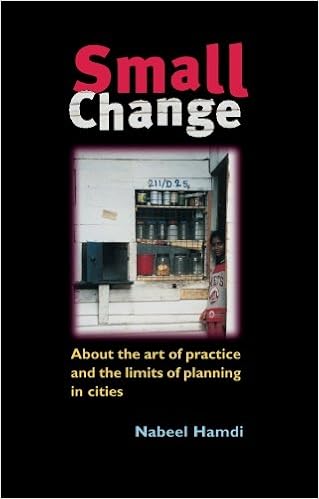
---, Small Change: About the Art of Practice and the limits of Planning in Cities(London: Earthscan, 2004). 

Hamdi, Nabeel, and Reinhard Goethert, Action Planning for Cities: A Guide to Community Practice (Chichester: John Wiley, 1997). 

Hamdi, Nabeel, and Jane Handal, eds., Urban Futures: Economic Growth and Poverty Reduction, Urban management series (London: ITDG Pub, 2005)

According to him, there are five types of communities, communities of interest, community of culture, communities of practice, communities of resistance, and place based communities. He argues that one has to move away from place based communities to communities of resistance, which is more relevant to the cities. He further argues that Communities of Resistance are at social unease and continue to change under oppressive and hierarchical dominance. 

Nabeel Hamdi is one of the proponent of participatory planning articulate in his book "Small Change", has been highly influential in discussing the role that informality plays in urban life. It sets out a way of thinking on cities that gives precedence to small-scale, incremental change over large-scale projects.


The transformation of informal to formal are central to housing issues within the cities. The improvement is not necessarily a physical one but rather social, economic and political one. It requires collective act towards formalizing process, this collective process is related to decision making, management related issues and importantly land tenure. This process is an important move as against the current practices because the adaptability in coming times shall not be an option but compulsion which is highly integrated to the idea of self-sufficiency, collaborative in nature. The dynamic of such process needs academic exploration which in turn may reflect on urban practice related to resilience.


Thursday, January 17, 2019

LUCKNOW: CULTURE, PLACE, BRANDING & ACTIVITISM


The recently published book titled “Lucknow: Culture, Place, Branding & Activitism” is a scholastic urban research work on contemporary urban transformation of Indian Second Tier cities. This especially brings about the urban discourse on second tier city subject whose genesis are embedded into the historic layers and are currently witnessing the rapid transformation. It builds interesting conversation on culture and heritage aspects of typical second tier Indian city with Lucknow as an example.  The book has seven sections largely focusing on the reasons for the need of such literature work on Indian cities, the transformation through new imagination in tandem with neo-liberal economy and governance, the quality of urban life, place and urban experience within historic inner cores, culminating into the place making process in contemporary time through cultural activism. The book brings about the concerns on account of diverse and often conflicting imagination, subjecting second tier cities into an object of global representation through symbols, images & formation of urban design policy and practice. It further builds the argument that the global conversation in social and cultural terms produces contestation of strange character, which is unsympathetic to the pattern of evolution of Indian historic cities.


The trend is not limited to Indian cities; rather the urban spatial and cultural transformation is witness in global south, almost replicating the archetypical characters of emerging pattern. In author term, attempting to describe the phenomena as “sociologically, globalization is understood as compassing all the processes by which people are incorporated into one singular, global society by compression of time and space” showing the concern towards the dichotomy of “what is lived has moved away into representation” which amounting to the spectacles for mass consumption and consolidation of capitalist production through post-fordist mode of production, engaging simultaneous places and people as production place for branding.

The book has valuable account of wealth of theoretical research, their contextualization and emerging questions that are deeply embedded in understanding of urbanism of Indian historic cities. This book is a must read for urban researcher, urban design & conservation professionals and students.

Wednesday, June 20, 2018

URBANISM ECOLOGY AND PLACE: Reading "City Riffs"

The recent publication of book titled " City Riffs" by Richard Plunz ( Columbia University, GSAPP) is based on urbanism discourse (dialogue) in relation to place and ecology. The preface by Kenneth Frampton argues the production of urban knowledge in neo-liberal economy results in aporetic question on limits and scope in the field of urban study. He brings about three important and critical discourses by Christopher Alexander on low rise, high density model, E.J Mishan work on "The Cost of Economic Growth" and Plunz work on "CIty Riffs" demonstrating the linear process of indictment of urban transformation towards maldistribution of resources.

The book brings the analogy of place and ecology, which needs in-depth understanding as both shares concept of place and space. His argument on place based centrality to urban discourse which perhaps has not been dissected theoretically enough as compare to environmental science. He argues further that how biological diversity merges with urban diversity and how evolutionary process of environmental science can aid the process of advancement of field based urbanism. The place based urbanism (field urbanism) and environmental science (not ecology) can be seen as entangled bank, which engages the challenge of conflict and dependency. 

The argument of  "Riff", improvisation is a disciplinarian movement addressing subtlety, ambivalence in field urbanism. 


Saturday, December 9, 2017

TRENDS AND ISSUES IN HOUSING IN ASIA: Book Review


The recently launched publication attempting to address housing situation in Asia,  derives its momentum from current theoretical inquiries into Asian Urbanism at large. The earlier literature were skewed towards the model of modernism and progressive, imagining the notion of future, and often Utopian in western generic sense. The publication is deviating and focusing on Asian models in addressing housing (at large) issues in major Asian cities. Though the focus of literature is housing but in turn its an attempt to build the larger urban discourse in validating Asian Urbanism (conceptual and incidental) and comparative model,  deriving its momentum from economic restructuring policies and imagine quality of life. 

This book is an important reference for audience who are concern about urbanism models of Asian cities and especially urban researcher/ scholars and students  who are attempting to carry out the academic research related to housing, urbanism and nature of imperatives that play significant role in shaping our cities in Asian context.


Ethical and Moral Construct of Modern