Showing posts with label CONTEMPORARY ARCHITECTURE. Show all posts

Monday, February 24, 2020

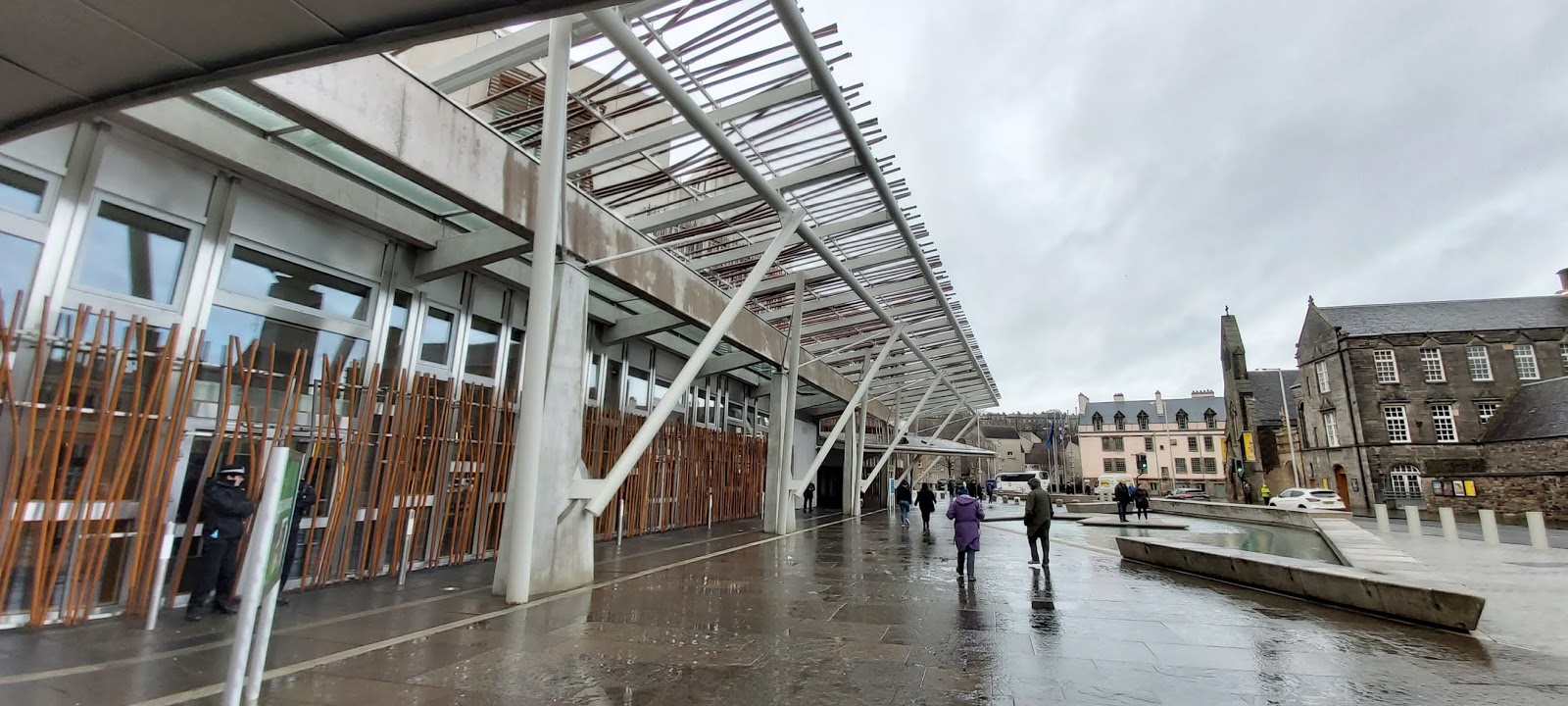
ARCHITECTURE OF SCOTTISH PARLIAMENT: ENRIC MIRALLES

Architecture has wider, longer lasting impact and influences on people than any other art form. It is perhaps debatable conversation to begin with when initiates to write about architecture of specific building. But, if, the argument is built around the fact that some work on Architecture take its own time to be responsive than any other art form, perhaps there is a question of timelessness or permanence begins to emerge in debate which in case of other art forms would be remotely connected to people except limited to its historic value. The discussion becomes more acute and concern as one attaches the question of national identity or pride or object that embodies the national functioning of democratic values. The responsibilities that architecture has, to render beyond its objectivity,  is of highest form, in addressing the question of permanence and functioning of democratic values.  

The Architecture of Scottish Parliament on first thought defies the question of identity, the explicit sense of belonging and collective iconography in contextual sense. It rather navigates through city structure, topography and intangible history of place for locating its intangible regional presence. It attempts to move away from iconographic commitment and representational liabilities (in context of regionalism) that architecture requires to, in order to be responsive and to be embedded in explicit sense. The building is ahistorical, and unfashionable (to para-matrix trenders). It enslaves the stages that inspires with silence and drama of unquietness along-with mysteries that insinuate themselves into the world of imagination for democratic values. Kahn parliament building has subtle meditative and arduous quality, indirectly suggesting the functioning of governance; Corbusier capitol complex has quality that embodies the highest form of reason and path towards emerging world. The Scottish Parliament moves away from monastic and explicit presence of monolithic history or singularity of utopia that modernist propagated. Rather architect preferred to hinge the multi-valence presence of empathy, turbulence of micro-metaphors, quotation and iconography of unknown with generosity to its public function.  

Miralles work embodies the empathy, the reason of unknown yet presence of an imagined world. If the parliament building, continues to magnifies the aspiration of land and people along with harmony of multitude of desires and imagination, then it will not be exaggerate to state that Architecture has emerged with the timeless quality and continue to stay as an appropriate building of our time. 


Photos Credit: Manoj Parmar Architects

Tuesday, March 5, 2019

ARATA ISOZAKI


“The aim of the latter-day Avant garde is either to validate itself through media or alternatively, to redeem its guilt by executing the rite of creative exorcism in isolation.”
Manfredo Taffuri


The Japanese architect Arata Isozaki’s work could best be explained in terms of theoretical in-between conditions or ambivalent in nature that most of the architecture desirous to move away from. Those conditions are exemplified in terms of mannerist to austerity, explosive utopia to repressed creativity, controlled architectonics to naïve & intoxicating casualness, reactionary to cultural nostalgia.

As a part of metabolist group in sixties (along with Kenzo Tange, Kurokawa, Kikutake etc), he appeared to have reacted to the alighting modernism in the context with reactionary imagination, longing for invigorate manifestation of the east. Later he chose to minimized his connections to metabolist group which seemingly appeared to adorned the exaggerated or overly utilitarian. The decline or disassociation with frantic futurist, gave rise to ideological emptiness, which in general described as being state of “Intellectual fatigue”. Yet the in-between state continues to dominate his work especially the Museum of Fine Arts, where formal expression are austere box with layered spaces with fluid formal generosity. The architecture of the building brought in the rare freshness to the Japanese architecture. The building is perhaps not easy to decipher yet very dramatic experientially. It brings the in-betweenness of formal expanse to dense spatiality.

The other building that has demonstrated the similar formal responses in tandem with the western pre-occupation with “postmodern architecture” is building at Disney in Florida. The architecture brings about vivid scenography of an eclectic who is aspired to pushes the architectural representation to its formal limits. The MOMA building in Los Angeles revives his incomplete manifestation of formal, functional & representative which were explored in Museum of Fine Arts.  The architecture of the building also brings about the in-between conditions austere to casual, naïve contextual to eclectic (application of Red Agra Stone, dressed in Japan). The MOMA building yet remains the finest and matured work that celebrates the in-between conditions, vividly embedded from user perspective yet seemingly embryonic in representation sense.

The large question that one restlessly would raise is the relevance or importance of his architecture in contemporary architectural paradigm. The architectural discourses that are entrapped between the expressionistic attitudes to situationist envision, the Isozaki work negotiates the extremities, it resonates the collage of time and memory, and it brings about naiveness architectural representation in critical manner in other word the mannerist striving for criticality of superficial.

Tuesday, February 19, 2019

ARCHITECTURE OF SPA (VIJAYAWADA) BUILDING

The building of institutional architecture has long been obsession of state since independence and the legacy continues till date.  Since then we have witnessed the architecture that are abstemiously struggling to bring about pan-Indian architecture of earlier phase to contemporary global architecture in recent times. The architecture that oscillated from decadence of Indian architectural wisdom to eclecticism of formal annexation in recent times, and both tendencies depict the enthusiasm to embrace the architecture that is contemporary enough, yet has embededness. The degree of experiments are perhaps have similar intensity as well as both the virtues brings about similar paradox, i:e how the idea of intellectual modernity challenging every day, “the rootedness social conditions” making conflicting reality to be perceived as being progressive at the same time vehemently bringing out the experiences away from colonial production.

The recently designed and constructed institute building for SPA Vijayawada demonstrates, on one side the similar conditions and traits that are historically developed yet moves away from genesis of architectural vocabulary that has been seen as forced template of post-independence architecture for the state. The architecture of the building has Corbusien idioms in many ways, yet explores it formal interpretation by re-reading/organizing the program. The four layers that are stacked with impounded formal implosion, exploring architecture of non-program, embodying the experiential dimensions that are often missing in the contemporary institutional architecture. The architecture of the building also depicts some of those brutal tendencies, clearly reflecting the formative circumstances of post-independence experiments with the institutions.

The architecture of the SPA’s definitely opens up the discourse on renewed ethics on cherished functionalist notion on one side while challenging the doctrine that comes as pre-determined aesthetics of global architecture. The buildings also bring the subtle transition of modern ethos of earlier first generation experiments by third generation of architects.

The building is still in its formative years in terms of its use and yet to be seen the role of such spaces,  web of program and non program in coming years which are apparently adding the value to the architecture.


Photo Credit: Manoj Parmar Architects

Ethical and Moral Construct of Modern