Showing posts with label URBAN TRANSFORMATION. Show all posts

Monday, March 30, 2020

SHADOW-LESS CITY


Photo Credit: Manoj Parmar Architects

Architecture and cities have metaphysical presence in us. We experience them differently depending on the state of worldliness that we inhabit, willingly or unwillingly. As a result of the recent global pandemic and the subsequent lockdown, architecture and the city appears to be a dream sequence of inconsequential collapsed time. The time is warped and entrenched into inscription and description of its architecture. It is like a De Chirico painting that reveals the ‘other’ city, conception of scaling and re-represented objects that are irrelevant to its own existence and moving away from any other literal interpretation. Architecture without people, cities without events are delirious to their very nature of being.

Public places with its architecture evoke another metaphysical city without people and events, destabilizing the act of perception and comprehension, engagement& disengagement, tending to be both thought provoking & disturbing and reading & writing; all simultaneously. The city has appeared to be compelling and resonating its formative circumstances while masking its contamination of time.  It encrypts the notations that are only parallel to inscriptions of archaeology whose notation brings meaning of the unforeseen &of untold stories.

The city and its architecture becomes another world of exploration because the city slowly begins to dissolve itself into its ordinary architecture. The events and people are no more remarkable sets, rather they become unrelenting glimpses of splintered utopia. The motion-less city-scape engulfed by inexplicable moods of social estrangement.  


The doors become more sceptical and the windows suddenly become lens for voyeurism. The door that was hinged in time, opens in fear, the window that frames the unframed is morphed with memories of time. The view and the viewed are in intense conflict of existence.  The architecture and the city begin to displace itself from being framed to being the frame of the unseen. It is a strange scene of a movie that was never shot with a keen eye or was desirable of wanting. It rather was that eye which is compelled to hover with utter disdain to the silence of the shadow-less city.

Wednesday, January 29, 2020

CULTURE FOR URBAN TRANSFORMATION


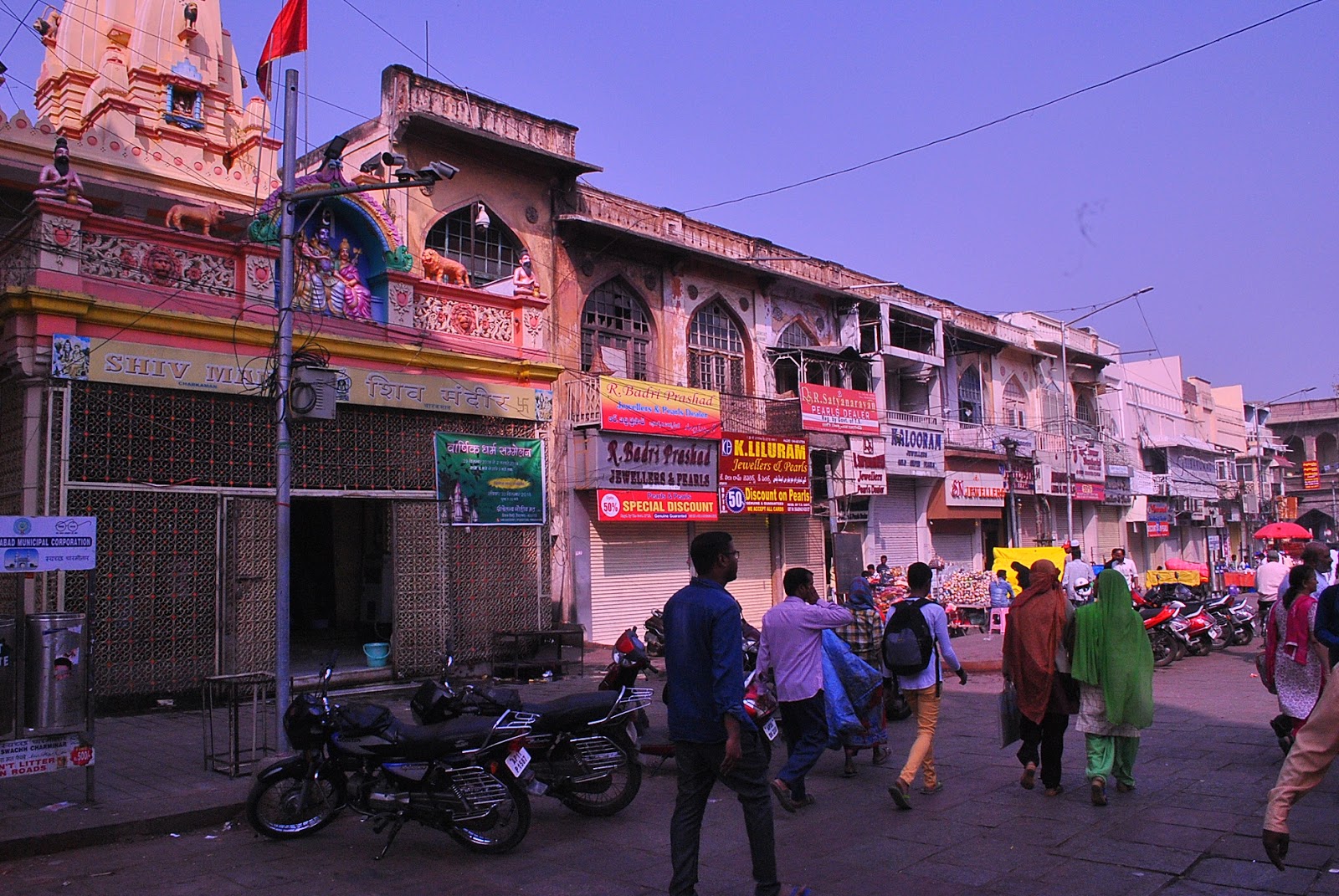
Culture is the key to our cities and it makes cities more livable, responsive and adaptable. History of urbanization demonstrates that culture is also a key to several urban trans-formative processes, enabling the formation of key civic architectural precincts, monuments, heritage, traditions and largely vibrant public realm. The public realm of the cities breaths through the social and cultural constituents formed by its historic urban fabric. The place-ness condition is uncontestably a repository of distinctive culture. The GLOBAL REPORT on CULTURE for SUSTAINABLE URBAN DEVELOPMENT by UNESCO brings about important argument on culture as sustainable model for urban development: What is the role of culture in urban development? How has culture influenced urban development across the world? How can culture make a difference for our urban future? 


Photo Credits : Manoj Parmar Architects (Hyderabad & Jabalpur)


Cities worldwide responds to globalization process of homogenizing differently and often they manifest themselves in reflected images of large cities. Jenifer Robinson in her literary work on “ORDINARY CITIES” brings about the Southern Urbanism discourse as non-hierarchical and beyond developmental-ism model. It is perhaps due to the intertwined or enmeshed condition of history, culture with globalization process in emergence.  The cultural discourse is re-emerging as symbiotic relationship between place, culture and economy (Singh, 2018). The cultural expressions give people the opportunity to identify themselves collectively, to read the traces of history, to understand the importance of traditions for their daily life, or to manifested realities. These are fundamental social and human needs that must be addressed in the context of urban development processes. How do we translate these realities into effective policies in sustainable urban planning?

The history of urbanization in Indian context is the key response to the social, spiritual, religious and economic needs in cities. The contemporary modes of planning paradigm often neglect or fail to represent the intrinsic and networked condition of Indian historic cities. There is a urgent need to identify the forces that underpin such historic networked conditions that are often being neglected in planning process and threaten this valuable relationship with diverse historic circumstances in contemporary urban development process. The emergence of cultural argument encompass the cultural territorial aspects of public realm, activity pattern along with history, heritage and enabling the cultural sustainability system within  the planning mechanism.

Perhaps its a time for bringing the theoretical inputs on place and people in forefront, sourcing knowledge by cutting across disciplines of Urban Planning, Urban Design and Urban sociology and moving towards the balance and inclusive economic development for the benefit of urban communities. There is a large benefit in safeguarding cultural heritage, the diversity of cultural expressions, strengthening of the sense of place (genius loci), and  the integrity of the urban fabric and the identity of communities.


Sunday, November 24, 2019

UNDERSTANDING RESILIENCE: WATER RESOURCES & HISTORIC CITIES OF INDIA

Water bodies are physically and spiritually an integral part of several historic cities of India. The presence of water bodies within the cities, not only added a symbolic value but also addressed the water needs of the city. The water as an urban system in context of supply and waste water are beyond the engineering domain and are important from sociological-ecological system point of view, because they form a very intricate relationship with the community and the city. However these cities are constantly transforming themselves through newer means of planning mechanisms with newer land use and newer relationships with the ecological system that are often conflicting with each other in nature. Within this framework,  the physical and spiritual essence of water continually degrades over a time period. The once privileged position of water bodies in such historic cities are subjected to land formation by land fill or are ignored as residual components, amounting to systematic encroachment of edges and deteriorating of primordial relationship of water, community and the city.

The city of Jodhpur, Bhopal and Jabalpur are few examples out of many second and third tier cities across India, where historic relationships are compromised and subjected to dismantling of an important urban component, which have capabilities to adopt newer challenges through urban water resilience strategiesThe effectiveness of a water based resilient infrastructure or its responsive urban fabric and its architecture depends upon its ability to anticipate, absorb, adapt to, and/or rapidly recover from a potentially disruptive state and even ultimately shows  the ability to return to its original state only by understanding the historic water system of such cities.

The key objectives while studying and documenting such cities must firstly address the issues that are related to the understanding of the water stresses/conditions or water based stresses that may impact the city water-basin or its urban fabric and its architecture, secondly the assessment of  the resilience of the city water basin and its geographical & intervened edge conditions and finally the capability to generate and appraise interventions that yield greater resilience for the city water basin/ conditions and its geographical and intervened edge conditions.

These challenges are certainly not simple to the water related historic cities, and there are no obvious strategies towards urban solutions. But the most important question is that  the issues related to water and historic cities must be considered and debated as an academic reflection with respect to the current mode of urban transformation and see to it that  resilience must become a paradigmatic concept, beyond a passing trajectory.


Photo Credit: Manoj Parmar | Faculty: KRVIA | Jabalpur


Photo Credit: Sanaeya Vandrewala | Faculty: KRVIA | Bhopal


Photo Credit: George Jacob | Faculty: KRVIA | Jodhpur

Three cities are part of KRVIA + Breucom project & Masters Studio II for Urban Design & Urban Conservation

Sunday, April 7, 2019

SMART CITY MISSION: New Urban Paradigm of Imagination or Perception


The recent time has seen the shift in urban planning concerns of our cities, especially second tier cities. The emerging paradigm of SCM  is aspired to be moving towards formation of  reactive, reflective and knowledge-oriented society. The SCM is expected to move from functional, hierarchical formation of our cities to networked form.

The stated goal of the Smart City Mission is to promote economic opportunity, improve governance, and make cities people friendly. The attempt towards SCM is to bring digital based dissemination of information and knowledge about the city, it is also assumed to have digital based structural and functional operation of city along with controlling, monitoring and integrating critical infrastructures of the city.


Along with the management and dissemination of information about infrastructure, it is also expected to re-configure the spatial formation of urban form, new means of achieving high densities, mobility networking, leisure and occupational necessities. The outcome of such endeavor is expected to influence the areas such as participation, entrepreneurial dimensions so that it brings about an equitable growth to our cities. 

In such context, the smart is conceptual model and not technique of planning, where digital data is an asset and important planning tool. It is also envisage in form of being progressive, transparent and information oriented planning process.

Would it be a slightly exaggeration to state that the Cities are being re- engineered with Techno-Utopian discursive construct to promote neoliberal rationalities or is it narrow way of knowing urban phenomena or new planning paradigm based on rational epistemology.


If this questions have unclear answers then the  politics, technical and epistemological of smart city initiatives need to be examined & critiqued. How every day is seen in a permanent state of emergency and urgency becomes the paradigm of action or how visual technologies are central to the ontological and practical configuration of cities or how data drives the urban transformation, hierarchies and rearrangement of urban life. These are the some of the fundamental question that urban research needs to focus on for coming years.

Wednesday, August 22, 2018

FALSE CREEK HOUSING: VANCOUVER

The history of False creek is slightly deceptive, as Britisher arrived with assumption that its going up to south via creek but ended in a delta. However the False creek divides the city from downtown to rest of the Vancouver. It has four interesting sides from the urban form point of view. The housing development along the creek has also taken diverse form due to its diverse DNA. The high rise dotting up the north side of the creek is an extension of downtown. The high rise apartment treats the water edge as an end of plot and begin of public space while one movers across the creek, the presence of low rise and high density housing is visible.

This low rise housing are strikingly exploratory in nature as each of group of housing cluster is shaped by its location and various aspects of micro pattern that emanates from simple human traits, almost out of Christopher Alexander's "Pattern Language" book. Each element of the housing, may it be entry, portico, kitchen garden, small bedroom opening, variety, roof light, access to water, activity node, degree of publicness, cluster size etc are clearly articulated in each scheme. The low rise treats the water edge as if its an extension of order from private to semi-public. Each housing within each cluster is topologically classifiable.

While the south east edge of the creek has Olympic village housing, bustling with commercial and retail activity in a large common plaza as an entry point from creek. The each block of mid rise housing has substantial density of units however the presence of regulated green spaces dilutes visual chaos.  The east and north edge brings the leisure and sports activity with high end housing almost merging with downtown. The west side is flanked by Granville island edge with mixed use development.

Due to the diverse housing form across the edge, the creek offers variety of pauses and energised situation and makes it the most popular urban place.


Ethical and Moral Construct of Modern